Written by Mark Wilson
5 November 2026
Written by Mark Wilson
Cybercriminals have discovered a surprisingly effective way to disrupt international food supplies: remotely changing the temperature of refrigerators. And the implications extend far beyond the food industry.
Imagine arriving at work one morning to discover that someone has turned your refrigerators into ovens. Not because the equipment has broken down. Not because someone left a door open. But because a stranger, possibly thousands of miles away, has accessed the controls and decided to turn up the temperature. It sounds like the plot of a particularly unambitious spy film. Unfortunately, it's happening.
Across Europe, supermarkets and food businesses have been dealing with cyberattacks that have sent refrigeration temperatures soaring, triggered defrost cycles and left businesses facing the prospect of throwing away valuable stock. And British companies are no longer watching from the sidelines.
A very expensive way to defrost a freezer
During October and early November, refrigeration systems at supermarkets across several European countries were compromised.
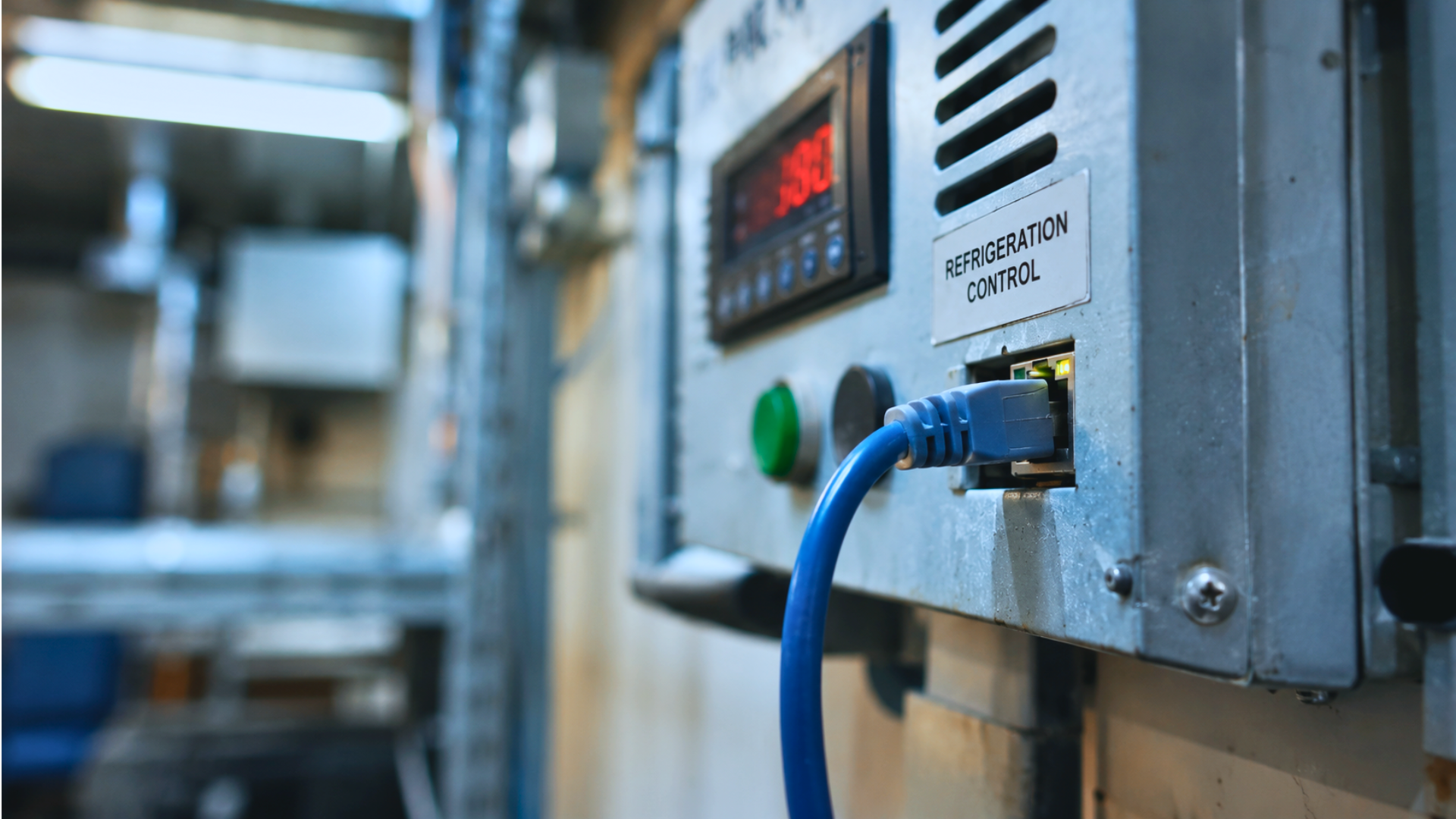
In some cases, temperatures were reportedly increased to more than 50°C. Shops were forced to discard refrigerated and frozen products, with substantial financial losses. The attacks exploited weaknesses in internet-connected refrigeration controllers - the systems that allow engineers and businesses to monitor temperatures and manage equipment remotely. These systems are designed to make life easier. A refrigeration engineer can check a fault without visiting the premises. A warehouse manager can monitor temperatures from another location. A supermarket can oversee dozens of refrigeration units centrally. All very convenient. Until someone else gets access.
The problem is that some systems were accessible through the public internet, used outdated software or had inadequate password protection. In other words, the criminals didn't necessarily need to defeat sophisticated security systems. In some cases, the digital equivalent of an unlocked back door was already there.
The British business that spotted something was wrong
At Langridge Organic, a fruit and vegetable wholesaler in west London, staff discovered that six of the company's ten cold-room control systems had been compromised.
The attackers had changed refrigeration settings, activated defrost cycles and interfered with the automated alerts that would normally warn staff about unsafe temperatures. Fortunately, the business carried out regular manual temperature checks. Managing director Alex Pearce noticed unusual behaviour and disconnected the affected equipment from the internet. No stock was lost.
Other British food businesses, including several meat suppliers, also experienced interference with their refrigeration systems. Again, prompt intervention prevented reported losses of produce. The incidents illustrate something important: the businesses were not necessarily the intended targets of a carefully planned, individual attack. They may simply have been using vulnerable equipment that someone had discovered could be accessed remotely. For a smaller business, that's a particularly uncomfortable thought.
Your business probably has more computers than you realise
Most business owners understand that their computers need protecting. They know about suspicious emails, stolen passwords, ransomware and the importance of backing up customer information. But what about the equipment that doesn't look like a computer? Modern businesses increasingly rely on connected technology to control physical operations.
Refrigeration units, heating systems, manufacturing machinery, security cameras, warehouse equipment and building-management systems may all be connected to networks or accessible remotely. This technology is often described as the Internet of Things, or IoT. In industrial environments, it's also part of what cybersecurity specialists call operational technology. The distinction matters.
When someone compromises an office computer, the consequences might involve stolen information or interrupted administration. When someone compromises equipment controlling a physical process, the consequences can include damaged goods, halted production, unsafe conditions and substantial financial losses. For businesses involved in international trade, the risks can extend beyond their own premises.
A manufacturer might depend on a supplier's production equipment. An importer might rely on temperature-controlled warehousing. A pharmaceutical distributor might need products to remain within tightly controlled conditions throughout an international journey. One vulnerable system somewhere along that chain could affect everyone depending on it.
The weakest link might belong to someone else
International supply chains are built on relationships between businesses that often have very different levels of technological sophistication. A major retailer might employ a dedicated cybersecurity team, while a smaller warehouse operator relies on an external contractor to maintain its equipment. Both may be essential to the same supply chain. This raises questions that businesses should increasingly be asking their suppliers and logistics partners.
Who can remotely access critical equipment?
How frequently is its software updated?
What happens if an automated monitoring system stops working?
And is there an alternative way to detect a problem?
The experience at Langridge Organic demonstrates the value of having a safeguard that doesn't depend entirely on the same connected technology. Its regular manual checks helped staff identify the problem even though the attackers had interfered with automated alerts. That doesn't mean businesses should abandon digital monitoring. It means they should avoid depending on a single system without considering what happens when it fails.
Five questions every business should ask
The UK's National Cyber Security Centre has been working with affected organisations and has urged businesses to address vulnerabilities in connected equipment.
For smaller companies, the starting point needn't be a complicated cybersecurity programme. It could begin with five straightforward questions:
What equipment can be accessed remotely? Make an inventory of connected machinery, monitoring systems and building controls, including equipment managed by external contractors.
Are software updates being installed? Ask suppliers whether known security vulnerabilities have been addressed and whether the equipment is still supported.
Who has access? Check that default passwords have been replaced and that remote access is restricted to authorised people.
Would anyone notice if something went wrong? Consider independent monitoring, physical checks and alerts that cannot easily be disabled through the affected system.
What happens if the equipment becomes unavailable? Establish how the business would protect stock, continue operations and contact customers or suppliers during an incident.
Businesses should also ask their technology providers whether critical control systems are unnecessarily exposed to the public internet.
A warning that goes well beyond food
Nobody has conclusively established who was responsible for the European refrigeration attacks.
And while some commentators have suggested possible political motives, there is currently insufficient evidence to attribute the incidents to a particular government or organisation. The National Cyber Security Centre has also said that these specific attacks were not AI-enabled. But the identity of the attackers isn't the most important lesson for businesses. The real warning is that technology introduced to improve efficiency can also create vulnerabilities if security is neglected.
For companies trading internationally, this is another reason to understand the operational resilience of suppliers, warehouses, transport providers and other commercial partners. A business can have excellent cybersecurity arrangements in its own office and still suffer serious disruption because a supplier's equipment is inadequately protected. International supply chains have always depended on things working properly in places we cannot see. Now, increasingly, they depend on those things being secure too.
And perhaps the next time someone asks whether your business is protected against cybercrime, it might be worth checking the freezer before answering.