Gatwick runway ruling: what expansion could mean for UK business travel
Written by Scott Pawley
London Gatwick has cleared a significant legal hurdle in its plans to bring its Northern Runway into routine use, potentially creating more choice, capacity and competition for UK companies whose employees travel internationally.
The Court of Appeal rejected attempts by two campaign groups to challenge the Government’s approval of the £2.2 billion expansion project. Gatwick can now move into the design and delivery phase, with the first departures from the Northern Runway expected as early as 2030.
For businesses, however, the importance of the decision extends beyond the addition of another strip of tarmac. If the capacity is used effectively, it could influence which destinations Gatwick serves, how frequently airlines operate and what companies pay to fly from the South East.
What has the Court of Appeal decided?
Transport Secretary Heidi Alexander approved the Northern Runway Project in September 2025. Peter Barclay, chair of the Gatwick Area Conservation Campaign, and Communities Against Gatwick Noise Emissions subsequently challenged the decision, principally questioning how the scheme’s climate implications had been assessed.
After those arguments were rejected by the High Court in June, the campaigners sought permission to take the case to the Court of Appeal.
According to The Independent, Lord Justice Holgate and Lord Justice Dove concluded that none of the proposed grounds of appeal had a realistic prospect of success. The judges also described the earlier High Court judgment as detailed and thorough.
Gatwick Chief Executive Pierre-Hugues Schmit said the decision brought an eight-year planning and legal process to an end and enabled the airport to “press on with the important job of bringing this exciting project to life”.
How will the Northern Runway be used?
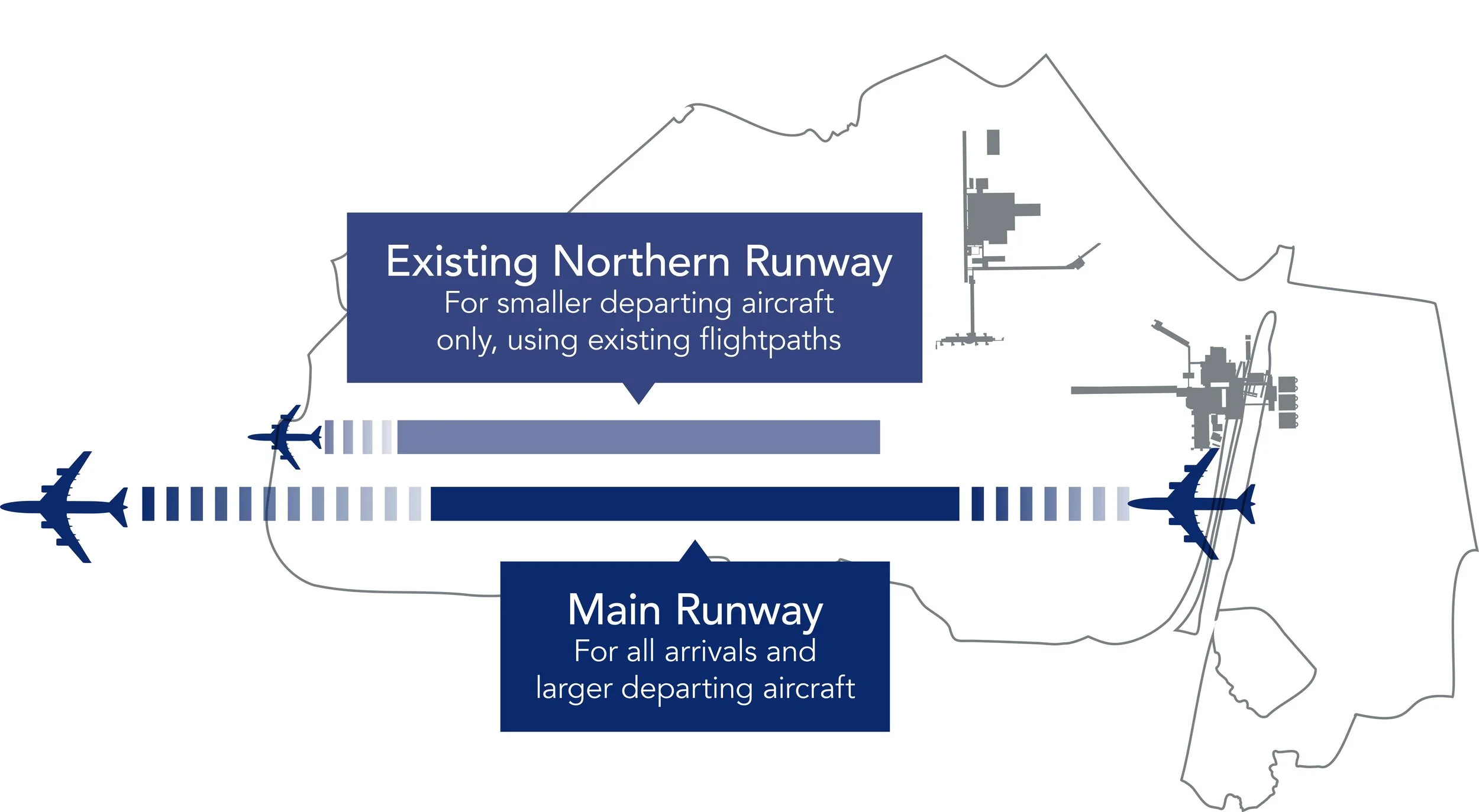
Gatwick already has two runways, but they cannot normally operate simultaneously. The Northern Runway is currently used mainly as a taxiway and is available for aircraft movements when the Main Runway is unavailable.
Under the expansion plans, its centre line will be moved 12 metres north, allowing it to operate alongside the Main Runway. It is expected to be used predominantly for departures by narrow-bodied aircraft such as the Airbus A320 and Boeing 737.
The project also includes changes to taxiways, terminals and aircraft gates. The Guardian reports that the development could enable approximately 100,000 additional flights and accommodate around 13 million more passengers each year.
Much of that initial growth is likely to be in short-haul flying. That may appear less consequential than the announcement of new long-haul services, but short-haul capacity is central to the travel programmes of many UK businesses, particularly those trading with European customers, suppliers and partners.
More capacity does not automatically mean lower fares
The strongest potential benefit for business travellers is greater competition.
Additional runway capacity creates room for incumbent airlines to add frequencies and for competitors to enter routes that may currently support only one or two operators. More departures to a destination can give travellers greater flexibility, reduce the need for overnight stays and make it easier to return on the same day.
Competition can also place downward pressure on fares. Nevertheless, businesses should be cautious about assuming that another 100,000 flights will automatically translate into cheaper travel.
The commercial outcome will depend on where airlines choose to deploy the available capacity, the level of demand and the balance between leisure and business-orientated schedules. A low-cost service departing once or twice a week may add passenger numbers without being particularly useful to someone attending a fixed meeting overseas.
For travel buyers, frequency, timings, flexibility and disruption support can matter as much as the headline ticket price.
Could Gatwick gain more long-haul connections?
Although the Northern Runway is expected to handle narrow-bodied departures, releasing pressure elsewhere in the airport could give Gatwick more scope to accommodate long-haul growth on its Main Runway.
Gatwick already serves more than 50 long-haul destinations, alongside a substantial European network. More capacity could therefore strengthen its role as an alternative to Heathrow for businesses in London, the South East and other areas connected to the airport by rail.
It could also support the growing use of longer-range narrow-bodied aircraft. Newer aircraft types allow airlines to serve thinner international routes that may not generate enough demand for a conventional wide-bodied service. That creates the possibility of direct connections to secondary commercial centres which would otherwise require a transfer.
None of those routes is guaranteed by the court judgment. Airlines, rather than airports, will decide where additional aircraft are flown. But the ruling removes an important source of uncertainty and gives carriers a clearer basis on which to consider Gatwick’s future in their network planning.
Resilience will matter alongside growth
Business travellers may also benefit if two-runway operation improves Gatwick’s resilience.
An airport operating close to the limits of a single runway has less capacity to absorb disruption. Additional operational headroom could help Gatwick recover more effectively when weather, technical problems or other events interrupt its schedule.
However, runway capacity is only one part of the traveller experience. More flights and passengers will place additional demands on terminals, security, baggage systems and surface transport.
Campaigners remain concerned about the project’s effects on noise, emissions, road congestion and public transport. Peter Barclay told The Guardian that airport expansion would increase pressure on roads and public transport, as well as affecting nearby communities.
Those concerns are commercially relevant to business travellers. Greater air capacity will deliver limited practical value if reaching the airport becomes less reliable or if passenger growth makes the terminal experience more congested.
A strategic development, but not an immediate change
The ruling does not alter tomorrow’s timetable or immediately create cheaper fares. Design, construction and airline planning will take several years, and Gatwick has yet to announce a detailed delivery schedule.
Its significance lies instead in the direction of travel. Gatwick now has greater certainty to plan for substantial growth at a time when airport capacity, international connectivity and Britain’s ability to compete for investment are closely linked.
UK companies should watch not only the headline increase in flight numbers, but also the routes, frequencies and airline competition that follow. Those details will determine whether Gatwick’s expansion genuinely makes international business travel more convenient, resilient and cost-effective - or simply makes the airport busier.