China’s Export Surge: What It Means for UK Businesses Competing Overseas
Written by Mark Wilson
7 August 2026
Written by Mark Wilson
China’s exports jumped by almost a quarter in July, but the most important story for UK businesses is not simply how much China is exporting. It is what China is exporting and where those products are going.
Chinese exports rose 23.9% year-on-year in dollar terms in July 2026, according to customs figures reported by the Financial Times. Exports of high-tech products increased by almost 41% in the first seven months of 2026 compared with the same period a year earlier. That points to a significant change in the competitive landscape facing British companies overseas.
For decades, many UK businesses have regarded China primarily as a source of low-cost manufactured goods, a supplier within their own supply chains or a vast potential market for British exports. Increasingly, there is a fourth consideration: Chinese companies are becoming formidable competitors in the international markets British businesses want to enter.
China is moving up the value chain
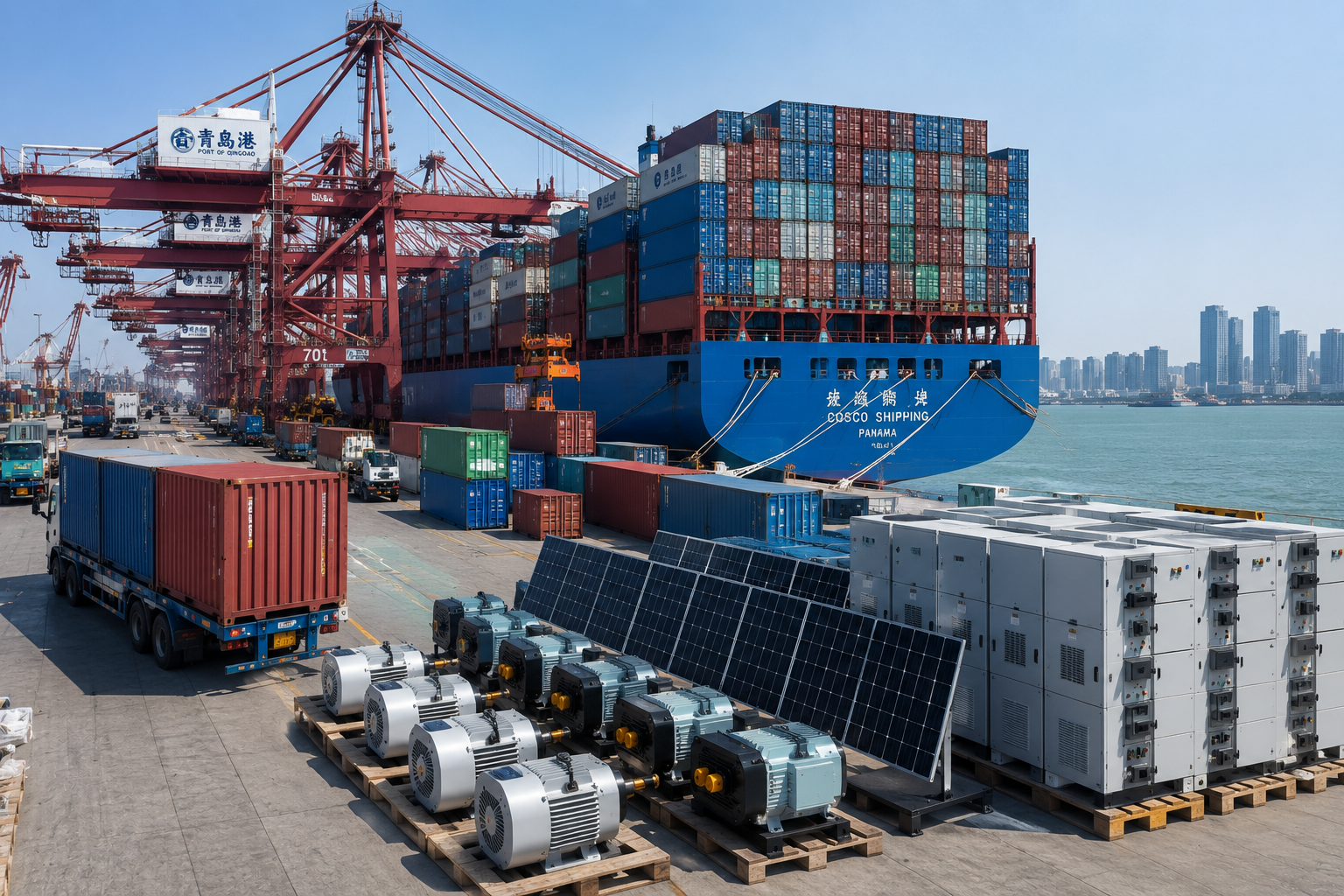
The familiar description of China as the "factory of the world" risks obscuring what is happening within Chinese manufacturing. The country's export strength increasingly extends beyond relatively simple consumer goods into electronics, electric vehicles, machinery, industrial equipment, batteries, robotics and other higher-value products. Electronic integrated-circuit exports reached a record $38.7 billion in July, according to the latest figures, while vehicle shipments increased 55% during the first seven months of 2026.
This matters because Chinese manufacturers are increasingly competing in areas traditionally associated with advanced industrial economies. The Wall Street Journal has described the development as a new Chinese export engine based around supplying the world's factories, with Chinese businesses selling machinery, components and manufacturing technology into markets including Mexico, Brazil and Vietnam.
For a UK manufacturer trying to expand into the same international markets, the competitive question is therefore changing. It is no longer simply: Can we compete with a cheaper Chinese product Increasingly, it is: Can we compete with a Chinese company offering sophisticated technology, competitive pricing, rapidly improving quality and the capacity to scale quickly?
Competition is moving into third markets
One of the most important implications for British exporters is that they do not have to sell into China to be affected by China's economic strategy. The competition may appear in Germany, Poland, the UAE, Saudi Arabia, Brazil, Mexico, India, Vietnam or another market entirely.
As trade tensions and tariffs make some established markets more difficult, Chinese exporters have powerful incentives to develop customers elsewhere. That potentially puts UK exporters into more direct competition with Chinese businesses in some of the very markets Britain is encouraging its own companies to explore. It also means that a traditional competitor analysis may no longer be sufficient.
A British engineering business considering expansion into Southeast Asia, for example, should not assess only established European, American or Japanese competitors. Chinese manufacturers entering that market may prove equally significant. That applies particularly where purchasing decisions are based on a combination of technology, price, delivery capability and after-sales support rather than price alone.
The scale of the change matters
China's goods trade surplus reached $687.4 billion between January and July 2026, according to the latest figures.
Europe is already experiencing the consequences.
Eurostat reported that the EU's goods trade deficit with China reached €98 billion in the first quarter of 2026, its highest level since the third quarter of 2022. Machinery and vehicles are among the areas in which the EU runs particularly substantial deficits.
The UK has its own sizeable imbalance.
UK Government figures show that Britain exported £31.4 billion of goods and services to China during the four quarters to the end of 2025 while importing £73.4 billion. The UK's goods trade deficit with China stood at £51.4 billion.
However, there is an important qualification. Britain recorded a £9.5 billion services surplus with China over the same period. That distinction offers an important clue as to where British competitive advantages may remain strongest.
Competing does not necessarily mean competing on price
For UK SMEs, attempting to beat large-scale Chinese manufacturers purely on manufacturing cost is unlikely to be an attractive strategy. But price is rarely the only consideration in international business. British companies can compete through specialist expertise, intellectual property, engineering capability, design, customisation, service, reliability, regulatory knowledge and strong customer relationships. For some businesses, the opportunity may be to move further towards specialised products and services where those advantages carry greater weight. For others, Chinese manufacturing strength could itself create an opportunity.
A British business does not necessarily have to choose between competing with China and buying from China. Lower-cost components, electronics, machinery or other inputs can potentially make a UK company's own product more competitive internationally. The strategic question becomes more sophisticated: where in the value chain can a British company create the most value?
That may involve manufacturing. But it could equally involve design, software, integration, consultancy, finance, professional services, distribution, branding or specialist technical support.
UK exporters need better competitive intelligence
For companies considering international expansion, China's latest export figures should also encourage a broader approach to market research.
Before entering a new overseas market, businesses should investigate not only demand for their product or service but the changing competitive environment.
That means asking:
Which Chinese companies already operate in the market?
How quickly are they growing?
How do their prices compare?
Where are they investing?
Are they selling directly or through local distributors?
What advantages do customers perceive in their products?
Where are their weaknesses?
What can a UK business offer that is genuinely difficult to replicate?
This type of intelligence can change the decision about which countries, customer segments or product categories offer the best opportunity. It may even reveal that a seemingly attractive market has become substantially more competitive than headline economic growth figures suggest. Conversely, it may identify niches where British expertise remains highly valued.
China can be market, supplier, partner and competitor
Perhaps the biggest mistake for UK businesses is to think about China in only one dimension. For some companies, China remains an important export market. UK services exports to China have continued to grow even while goods exports have weakened. For others, China is an essential part of the supply chain.
Some businesses will find Chinese companies increasingly competing for their customers. And others may discover opportunities to partner with Chinese businesses, use Chinese technology or components, or provide services to Chinese companies expanding internationally. Those roles can exist simultaneously.
The challenge for business leaders is therefore not to decide whether China represents an opportunity or a threat. It is to understand where their company sits within an increasingly complex international commercial relationship.
What should UK businesses do now?
China's July export figures should prompt internationally focused UK companies to review their assumptions.
Businesses planning overseas expansion should look carefully at Chinese competition within their target markets rather than concentrating exclusively on domestic competitors or familiar Western multinationals. Manufacturers should examine whether Chinese advances in machinery, components and technology create opportunities to reduce costs or improve their own products — while also considering the resilience and geopolitical risks associated with greater supply-chain dependence. And companies whose competitive proposition is primarily based on products that can easily be replicated and manufactured at scale may need to consider where additional value can be created through service, expertise, technology or specialisation.
China's latest export numbers are impressive. But the numbers themselves are not the most important development. The bigger story is the transformation taking place underneath them. China is increasingly competing in higher-value industries and supplying the machinery, technology and components used by businesses around the world. Its exporters are looking well beyond their traditional markets.
For UK companies with international ambitions, understanding that change is becoming an essential part of deciding where to compete, how to compete and what makes their business genuinely different.